Square Footage Calculator: How to Measure and Calculate Area for Any Space
A square footage calculator helps you determine the area of any rectangular space by multiplying its length by its width. Whether you're buying flooring for a living room, estimating paint for a bedroom, or comparing property sizes during a home search, knowing the exact square footage saves you time and money.
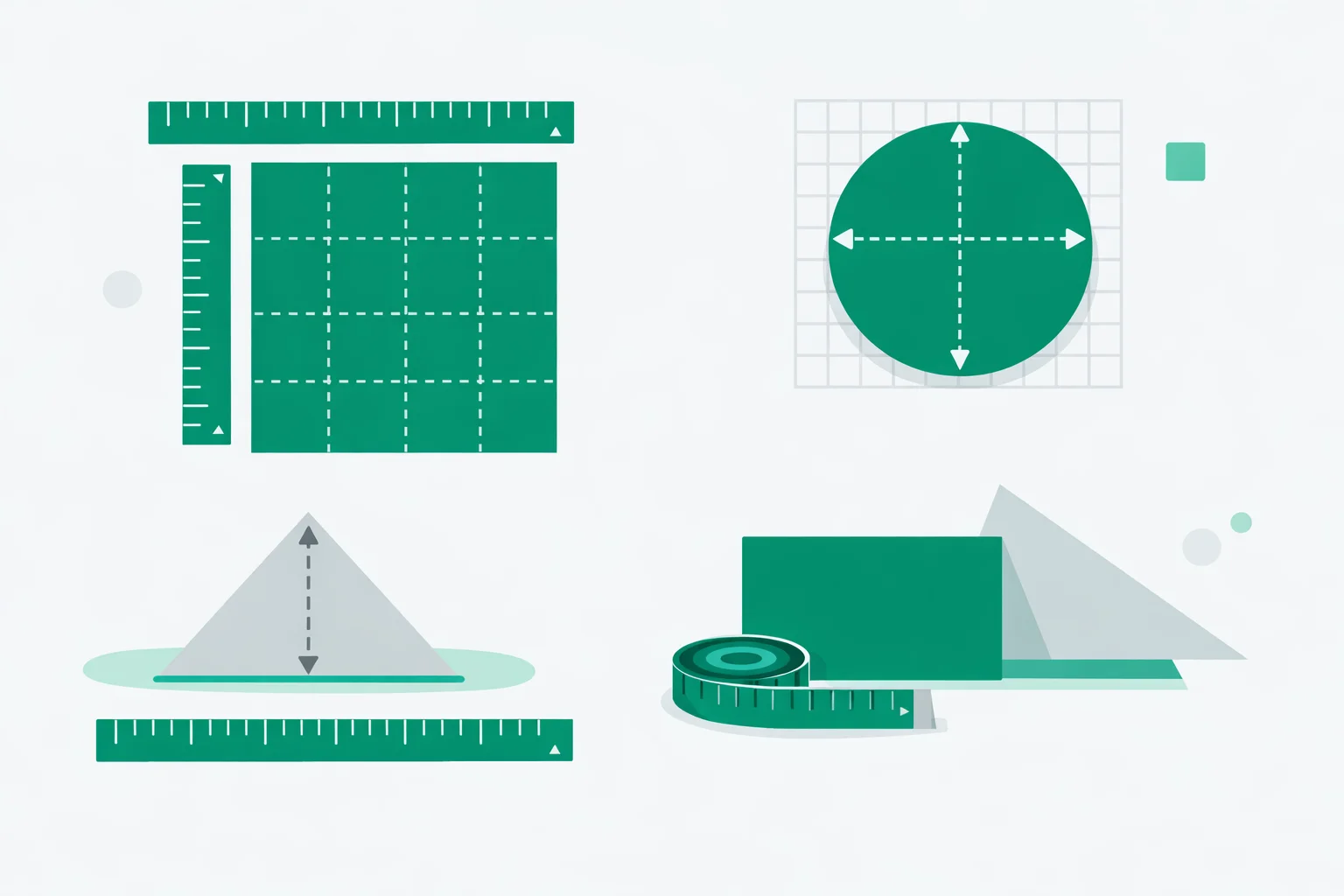
What Is Square Footage?
Square footage is a measurement of area expressed in square feet (sq ft or ft²). One square foot equals a flat surface that is 1 foot long and 1 foot wide — roughly the size of a large floor tile. In the United States, square footage is the standard unit for measuring rooms, homes, commercial spaces, and land parcels.
Real estate listings, building permits, flooring products, and paint cans all reference square footage. Getting an accurate measurement is the first step in nearly every home improvement and construction project.
How to Calculate Square Footage
The formula for square footage is straightforward:
Area (sq ft) = Length (ft) × Width (ft)
For a bedroom that measures 14 feet long and 11 feet wide, the area is 14 × 11 = 154 square feet. If you measured in inches, divide each measurement by 12 first to convert to feet. For meters, multiply each measurement by 3.281 before multiplying them together.
When a room is not a simple rectangle, break it into smaller rectangular sections. Calculate each section separately, then add the results. An L-shaped kitchen, for example, becomes two rectangles: a 10 × 12 section (120 sq ft) and a 6 × 8 section (48 sq ft), totaling 168 square feet.
Square Footage for Flooring Projects
Ordering flooring materials is the most common reason homeowners calculate square footage. After you measure each room, add 10% extra for straight-lay patterns (hardwood, laminate) or 15% for diagonal and tile patterns where more cutting waste occurs. Our flooring calculator takes it further — turning your square footage into the number of boxes to buy plus material and installation cost by floor type.
For example, a 200 sq ft room needs at least 220 sq ft of hardwood or 230 sq ft of tile. For irregular spaces or multi-room totals, our area calculator handles rectangles, triangles, and circles so you can add up mixed shapes before applying your waste factor. The same room dimensions feed a repaint too — our paint calculator turns wall area into gallons of paint and primer, and our wallpaper calculator turns the same perimeter into rolls, pattern repeat and all. That square footage also drives a lighting plan — feed it into our recessed lighting calculator to see how many can lights the room needs and how far apart to space them.
Common Square Footage Reference Sizes
Knowing typical room sizes helps you estimate quickly before measuring:
- Small bedroom: 10 × 10 = 100 sq ft
- Standard bedroom: 12 × 12 = 144 sq ft
- Master bedroom: 14 × 16 = 224 sq ft
- One-car garage: 12 × 20 = 240 sq ft
- Two-car garage: 20 × 24 = 480 sq ft
- Average U.S. home: approximately 2,300 sq ft
Converting Between Area Units
Square feet are standard in the U.S., but you may need other units depending on the project or product labeling:
- Square yards: Divide square feet by 9. Carpet is often priced per square yard — 180 sq ft of carpet equals 20 sq yd.
- Square meters: Multiply square feet by 0.0929. International products and scientific contexts use square meters — 500 sq ft is about 46.5 sq m. These conversion factors come from the NIST official SI unit definitions.
- Acres: Divide square feet by 43,560. Use our acre calculator for large land measurements — 1 acre equals about 43,560 sq ft.
Tips for Accurate Measurements
- Use a 25-foot tape measure for rooms and a laser distance meter for large or hard-to-reach spaces.
- Measure at floor level, not along the wall, since walls can bow slightly.
- Measure in the same direction as the longest wall to minimize small rounding errors.
- For rooms with closets, measure the closet separately and add it to the room total.
- Round measurements to the nearest half-inch for home projects, or the nearest quarter-inch for precision work like tile layout.
Square Footage for Painting and Materials
Knowing your wall square footage tells you how much paint to buy. To calculate wall area, add the length of all four walls, multiply by the ceiling height, then subtract window and door openings. A standard gallon of paint covers about 350 to 400 square feet.
For construction materials like drywall, insulation, or siding, the same floor-area calculation applies. Planning a full build? Our construction calculator estimates lumber, concrete, drywall, roofing, and flooring quantities from a single square footage input. If you just need volume for materials like concrete or gravel, try our cubic yard calculator instead. Spreading mulch on those beds? Feed your total square footage into the mulch calculator to turn it into cubic yards, bag counts, and a bulk-vs-bagged price. Laying a patio on that area instead? The paver calculator converts your square footage into a paver count plus the base gravel, bedding sand, and edging beneath it.
When to Use This Calculator
Use this square footage calculator when you are pricing flooring, carpet, or tile for one or more rooms. It is also helpful when comparing property sizes in real estate listings, estimating paint coverage for interior or exterior walls, calculating material needs for decking, roofing, or siding, and determining the total living area of your home for appraisal or tax purposes. The multi-room feature lets you add every space in a project and get a single combined total.