Fence Calculator: Posts, Pickets, and Concrete for Any Fence Style
A fence calculator that counts 19 posts for a 150-foot run just shorted you a post. Here's the catch every first-time fence builder hits: for a straight line of fence, you always need one more post than you have sections. Nineteen 8-foot sections need 20 posts, because the fence has two ends and every section in between shares a post with its neighbor. Miss that single "plus one" and you're back at the lumberyard before the first rail goes up. That off-by-one is the most common fence math error there is — and it's where this tool starts.
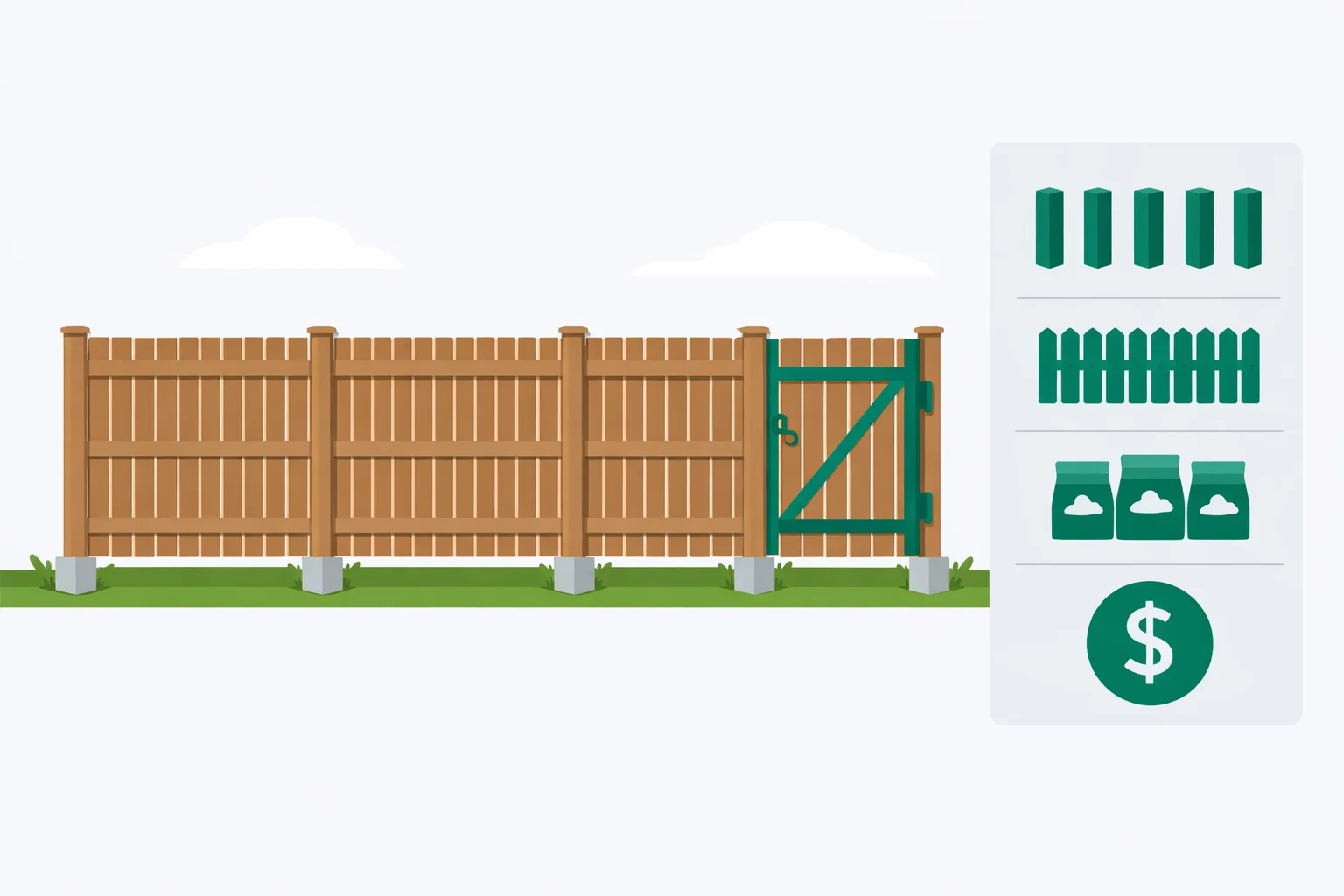
Why You Always Need One More Post Than Sections
Think of a fence as a row of fence panels, each one strung between two posts. The first panel needs a post on each end — two posts for one section. Add a second panel and it only needs one new post, because it shares the first panel's end post. Keep going and the pattern holds: posts = sections + 1.
So divide your length by the post spacing, round up, then add one. A 150-foot run at 8-foot spacing is 150 ÷ 8 = 18.75, which rounds up to 19 sections, so 20 line posts. Tighten the spacing to 6 feet for a sturdier fence and you jump to 25 sections and 26 posts — six more holes to dig and concrete to mix for the exact same property line. Then add a post at every corner where the fence changes direction and one beside each gate. Those extras aren't optional: a corner post anchors two runs pulling against each other, and a gate post takes the swinging load of the leaf every day for years.
Posts, Rails, and Infill: Three Bills, Not One
Every fence is three separate material orders stacked together, and pricing them as one lump is how estimates go wrong. The posts are the vertical structure sunk in concrete. The rails are the horizontal members spanning post to post — two for fences under 5 feet, three once you hit 6 feet, because a tall picket left unsupported in the middle will warp and twist within two seasons. The infill is everything you actually see: pickets, panels, or chain-link mesh.
That third bucket is the one that moves the number. Posts and concrete cost roughly the same whether you build in cedar or chain-link — a hole is a hole. What separates a $1,500 chain-link fence from a $6,000 aluminum one is the infill. When you switch the material in the calculator and watch the total swing while the post count barely budges, you're watching the infill do all the work. If you want to price the rails and pickets by lumber volume instead of by the piece, our board foot calculator converts the whole cut list into board feet.
How Deep Posts Go — and How Much Concrete That Eats
The rule contractors live by: bury at least one-third of the post's total height. A 6-foot fence means posts set 2 feet deep, so you buy 8-foot posts and sink a quarter of each one. An 8-foot fence needs about 3 feet of burial and 11- to 12-foot posts. Skimp on depth and the fence leans the first time a storm leans on it.
Concrete is where the budget quietly grows, because each hole is bigger than it looks. A 10-inch-diameter hole 2 feet deep is the volume of a cylinder — π × radius² × depth, or 3.14 × 0.417² × 2 = 1.09 cubic feet. Subtract the post and a few inches of drainage gravel and you're setting about 0.9 cubic feet per hole, which is two 60-pound bags. A 150-foot privacy fence with 20 posts therefore swallows roughly 40 bags of concrete — a half-ton of mix you have to haul, and a real line item most people forget. To resize that for a wider hole or deeper frost footing, our concrete calculator gives the exact bag count. In cold climates, confirm your frost depth and set posts below it — pressure-treated posts rated for ground contact by the American Wood Council are the minimum for anything buried.
Pricing a Real 150-Foot Privacy Fence
Let's build the whole thing in numbers. A 6-foot cedar privacy fence, 150 feet long, posts every 8 feet, three corners, one walk gate:
- Sections: 150 ÷ 8 = 18.75 → 19 sections
- Posts: 19 + 1 (the end post) + 3 corners + 1 gate = 24 posts × $14 ≈ $336
- Rails: 6-ft fence = 3 rails × 150 ft = 450 lf × $1.20 ≈ $540
- Pickets: 150 ft × 12 ÷ 5.5-in width = 327, +10% waste = 360 pickets × $3.50 ≈ $1,260
- Concrete: 24 holes × ~2 bags = 48 bags × $6 ≈ $288
- Gate + hardware: one walk gate ≈ $90, plus section hardware ≈ $115
- Labor at $18/ft: 150 × $18 = $2,700
Total: roughly $5,300 installed, about $35 a linear foot. Two things jump out. Labor is the single largest line at just over half the project, which is why framing it yourself drops the build closer to $2,600 in materials. And the pickets cost more than the posts, rails, and concrete combined — the part you see is the part you pay for.
What a Foot of Fence Actually Costs by Material
This is the table to plan a budget with. Prices are installed cost per linear foot for a typical 6-foot residential fence — the single number that lets you compare quotes apples to apples.
| Material | Installed $/ft | Lifespan | Upkeep |
|---|---|---|---|
| Chain-Link | $10–$20 | 15–20 yrs | None |
| Wood Picket | $15–$28 | 12–18 yrs | Seal every 2–3 yrs |
| Wood Privacy | $25–$40 | 15–20 yrs | Seal every 2–3 yrs |
| Vinyl Privacy | $25–$45 | 25–30 yrs | Wash only |
| Aluminum Ornamental | $30–$55 | 40+ yrs | None |
The spread is enormous — the same 150-foot line costs $2,250 in chain-link or $7,500 in aluminum. Chain-link wins on pure price and maintenance but hides nothing. Wood is the cheapest way to get true privacy, yet it's the only material here that demands a stain or seal coat every couple of years to avoid graying and rot. Vinyl costs more up front than wood privacy but never asks for a brush again, and over 25 years that maintenance gap usually erases the price difference. Aluminum is the premium look that outlives your mortgage.
Counting Pickets and Why the Gap Changes Everything
Picket math comes down to one division, and the gap is the variable that breaks people's estimates. For a privacy fence, boards butt edge to edge with no gap, so a "6-inch" picket (really 5.5 inches wide) covers 5.5 inches of fence. Divide the fence length in inches by that width: a 150-foot fence is 1,800 inches ÷ 5.5 = 327 pickets, plus 10 percent for warped and cracked culls, so 360.
Now space those same pickets for a classic picket fence. A 3.5-inch picket with a 2.5-inch gap covers 6 inches each, so 1,800 ÷ 6 = 300 pickets — and each one is narrower and cheaper. That gap is why a picket fence costs roughly 35 percent less in boards than a privacy fence of the same length. Change the gap from 2.5 to 3.5 inches and you drop another 40 pickets. The infill is the most flexible lever you have on the whole estimate, which is exactly why the calculator recomputes it the instant you switch fence types.
Fence Mistakes That Cost Real Money
Four errors show up again and again, and each one has a price tag:
- Forgetting the corner and gate posts.A rectangular backyard has four corners — that's four posts beyond the straight-run math. Order without them and you're short four posts and eight bags of concrete, a $120 second trip.
- Skipping the third rail on a 6-foot fence. Two rails save about $90 in lumber and guarantee a wavy, bowing fence within two summers. Replacing warped pickets later costs ten times what the rail would have.
- Setting posts too shallow. A 6-foot post set 12 inches deep instead of 24 leans within a year. Resetting one post means digging out 80 pounds of cured concrete by hand — budget a half-day per post.
- Under-ordering pickets. Skipping the 10 percent waste factor on 327 pickets leaves you 30 boards short, and the next batch from the store rarely matches the color of the first.
When Your Yard Isn't Flat: Stepping vs. Racking
The calculator assumes level ground, and most yards aren't. On a slope you have two choices, and they change the material list. Stepping keeps each section perfectly horizontal and drops it down like a staircase, leaving triangular gaps under each panel that grow on steeper grades — fine for a formal panel fence, but it wastes pickets where they overhang. Racking(or raking) skews each section to follow the ground so the rails run parallel to the slope and the gaps disappear. Stick-built wood pickets rack easily; pre-assembled panels and most vinyl kits don't, which is a real reason to choose stick-built on a hilly lot.
Either way, slope eats material. A 10 percent grade adds 1 to 2 percent to your rail and picket lengths because the fence follows a longer diagonal than the flat footprint. It's not huge, but it's real — add it to your waste factor on a steep run rather than trusting the level estimate.
Property Lines, Setbacks, and the Good-Neighbor Rule
Before any of this matters, you need to know where your line actually is. Building even 6 inches over the boundary can force a tear-out, and a fence is one of the most common triggers for neighbor disputes. Pull your plat or get a survey if you're unsure — it's cheaper than moving a finished fence.
Most municipalities also cap front-yard fence height at 3 to 4 feet and backyard height at 6, and many require permits over a certain height. Pools are stricter: residential codes such as the International Residential Code pool-barrier provisions require a fence at least 48 inches tall with self-closing, self-latching gates around any pool. And the "good-neighbor" convention — and sometimes the law — puts the finished side facing out, with rails and posts toward your own yard. If your fence ties into a larger project, our construction calculator rolls fencing in with the rest of the build. Confirm the local rules first, then let the post-and-picket math fall into place.