Rebar Calculator: How to Size and Estimate Reinforcement Steel for Any Concrete Project
A rebar calculator takes the guesswork out of ordering reinforcement steel for concrete projects. Whether you're pouring a garage floor, setting up foundation footings, or building a retaining wall, getting the rebar quantity wrong means either wasted money on surplus bars or — worse — a mid-pour shortage that compromises the structural integrity of your concrete. This tool calculates exactly how many linear feet, pieces, and pounds of rebar you need based on your project's dimensions, bar size, and spacing pattern.
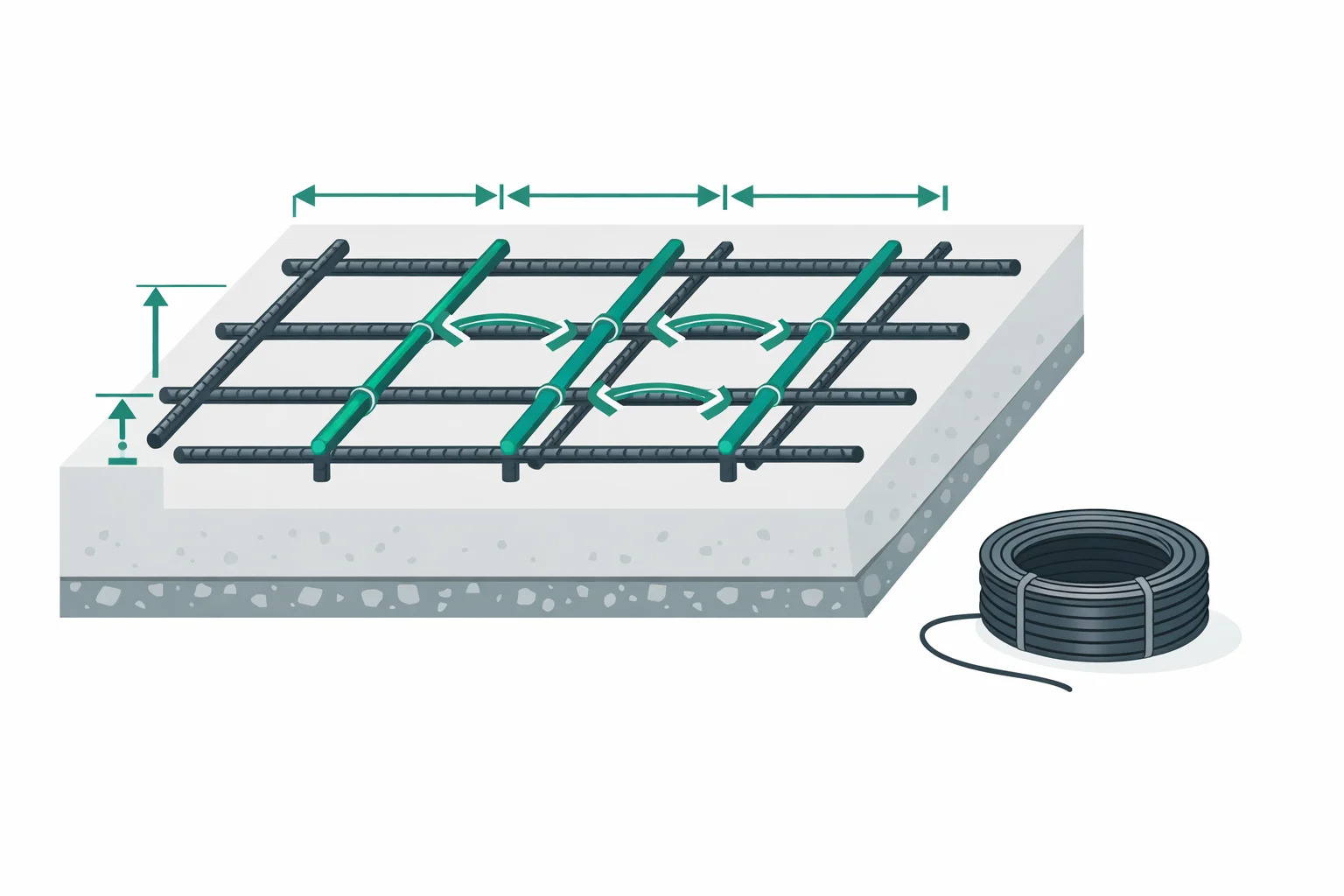
What Is Rebar and Why Does Concrete Need It?
Rebar — short for reinforcing bar — is deformed steel rod embedded inside concrete to handle tensile (pulling) forces. Concrete itself is excellent under compression but cracks easily under tension and bending. A 4-inch slab without reinforcement can crack from something as simple as soil settling unevenly beneath it. Rebar turns brittle concrete into a composite material that resists both compression and tension, which is why building codes require it in driveways, foundations, retaining walls, and any structural pour.
The deformed ridges on rebar aren't decorative — they create mechanical grip between the steel and surrounding concrete. Smooth bars would simply slide through the concrete under load. Those ridges are why rebar works, and they're also why lap splices (overlapping bar ends) transfer force from one piece to the next.
Rebar Size Chart: Diameter, Weight, and Common Uses
Rebar is identified by a number that corresponds to its diameter in eighths of an inch. A #4 bar is 4/8" (1/2") in diameter; a #6 bar is 6/8" (3/4"). Here's what each size is typically used for:
| Size | Diameter | Weight/ft | Typical Use |
|---|---|---|---|
| #3 | 3/8" | 0.376 lb | Stirrups, ties, light slabs, temperature reinforcement |
| #4 | 1/2" | 0.668 lb | Driveways, garage slabs, residential foundations, patios |
| #5 | 5/8" | 1.043 lb | Foundation walls, retaining walls, structural footings |
| #6 | 3/4" | 1.502 lb | Heavy foundations, commercial footings, large retaining walls |
| #7 | 7/8" | 2.044 lb | Commercial columns, bridge decks, heavy structural members |
| #8 | 1" | 2.670 lb | Large structural columns, mat foundations, bridge piers |
For residential work, #4 rebar covers about 80% of projects. You'll only reach for #5 or #6 when engineering plans call for it — typically retaining walls over 4 feet or foundations with heavy point loads.
How Rebar Quantity Is Calculated
The core formula for a slab grid is straightforward. Count the number of bars running in each direction, multiply by the bar length, and add the two totals together.
For a rectangular slab:
- Bars along the length = (width ÷ spacing) + 1
- Bars along the width = (length ÷ spacing) + 1
- Total linear feet = (bars along length × length) + (bars along width × width)
Then add a waste factor — typically 10% — to account for lap splices, bends, and cutting scrap. Finally, divide by the standard bar length (20 feet) and round up to get the number of pieces to order.
Worked Example: 24×24 Garage Slab
Let's walk through a real-world example. You're pouring a 24×24 foot garage slab and the plans call for #4 rebar on 12-inch centers in both directions.
- Bars across the width: (24 ft ÷ 1 ft spacing) + 1 = 25 bars, each 24 ft long = 600 ft
- Bars across the length: (24 ft ÷ 1 ft spacing) + 1 = 25 bars, each 24 ft long = 600 ft
- Subtotal: 1,200 linear feet
- Plus 10% waste: 1,320 linear feet
- Pieces needed: 1,320 ÷ 20 = 66 pieces of 20 ft #4 rebar
- Total weight: 1,320 × 0.668 lb/ft = 882 lbs
- Estimated rebar cost: 1,320 × $0.55/ft = $726
You'd also need about 6 rolls of tie wire and around 72 rebar chairs to hold the grid 2 inches above the subgrade. Total reinforcement cost for this garage slab: roughly $800-850.
To figure out how much concrete you'll need for that same garage slab, use our concrete calculator— a 24×24 slab at 5 inches thick works out to about 8.9 cubic yards before waste.
Rebar Spacing Guide by Project Type
Spacing determines how much reinforcement your concrete gets per square foot. Tighter spacing means more steel, more weight, and higher cost — but also a much stronger slab. Here's what's standard for common residential projects:
| Project Type | Bar Size | Spacing | Rebar/100 sq ft |
|---|---|---|---|
| Sidewalk / patio | #3 | 18" o.c. | ~135 ft |
| Residential driveway | #4 | 18" o.c. | ~135 ft |
| Garage floor | #4 | 12" o.c. | ~200 ft |
| House foundation | #4 | 12" o.c. | ~200 ft |
| Retaining wall (4 ft) | #5 | 12" o.c. | ~200 ft |
| Heavy-duty driveway | #5 | 12" o.c. | ~200 ft |
These are starting points. Always check your local building code or engineered plans — they override any rule of thumb. An engineer might specify tighter spacing near edges, at corners, or under point loads like columns.
Lap Splices: How Much Overlap Do You Need?
Standard 20-foot rebar lengths won't span most projects without splicing. The overlap (lap splice) rule is simple: 40 times the bar diameter. For #4 rebar, that's 40 × 0.5" = 20 inches of overlap. For #5, it's 25 inches.
This overlap is why the waste factor matters. On a 50-foot footing with #4 rebar, each 20-foot bar loses about 20 inches to the next splice. Over two splices per run, that's 40 inches of "extra" steel that isn't covering new ground. The 10% waste factor in our calculator accounts for this overlap plus cutting scrap.
Stagger your splices so adjacent bars don't overlap at the same spot — the ACI 318 building code requires this to maintain full structural integrity at every cross-section.
Rebar Placement Tips from the Field
Getting the rebar calculation right is only half the job. Placement matters just as much as quantity.
- Maintain concrete cover. Rebar needs at least 2 inches of concrete cover on the bottom and 1.5 inches on sides. Use rebar chairs (dobies) — never stack bricks or rocks as makeshift supports. They shift during the pour.
- Tie every intersection. On slab grids, tie the bars at every other intersection minimum. On structural elements, tie every intersection. Use 16-gauge tie wire and a rebar tie tool — hand-twisting gets old fast on a 500+ tie job.
- Bend bars cold. Never heat rebar with a torch to bend it. Heat changes the steel's temper and weakens it. Use a manual rebar bender for #3 through #5, or rent a hydraulic bender for #6 and up.
- Keep bars clean. Rebar should be free of loose rust flakes, oil, mud, and paint before the pour. Light surface rust is actually fine — it improves bond — but caked-on dirt or grease kills the concrete-to-steel grip.
If you're planning the full pour, our concrete slab calculator handles the concrete volume, gravel base, and total cost estimate in one step.
Rebar vs. Wire Mesh: Which One Do You Need?
Wire mesh (typically 6×6 W1.4/W1.4) and rebar serve different purposes. Mesh controls shrinkage cracking in light-duty slabs — patios, walkways, and interior floors that don't carry loads. It's cheaper ($0.15-0.25 per sq ft vs. $0.45-0.75 for rebar) and easier to install since it comes in pre-made sheets.
But mesh has real limits. It doesn't provide structural reinforcement against bending forces, which is what happens when a heavy truck parks on your driveway or when soil settles under one corner of a foundation. For anything that supports vehicle loads, sits on unstable soil, or is governed by a building code, rebar is the right choice. Most residential driveways and garage floors should have #4 rebar on 18-inch centers minimum.
Common Rebar Mistakes That Weaken Concrete
These errors show up on job sites constantly, and every one of them can turn an expensive pour into a structural liability:
- Rebar sitting on the ground. Without chairs, the rebar ends up at the very bottom of the slab where it does almost nothing. Rebar works by resisting tension in the lower third of the slab — but it needs 2" of cover beneath it to bond properly. This single mistake accounts for the majority of cracked residential slabs.
- Skipping overlap on splices. Butting two bars end-to-end transfers zero load. You need 40 diameters of overlap, tied at three points, to transfer the full tensile force from one bar to the next. On #4 rebar, that's 20 inches — not 6 inches.
- Wrong bar size for the job. Using #3 where #4 is specified saves a few dollars per bar but cuts the cross-sectional steel area by 44%. That's not a rounding error — it's a structural deficiency that could show up as cracks within the first year.
- Spacing wider than specified. Jumping from 12" spacing to 18" reduces the steel per square foot by 33%. The inspector will flag it, and you'll pull the pour apart to fix it.
When to Use This Calculator
Pull up this rebar calculator whenever you're planning a concrete project that includes steel reinforcement:
- Ordering materials for a concrete pour — get an accurate piece count and weight so your steel supplier can prepare the order and you know what your truck needs to haul.
- Bidding a concrete job — calculate the rebar cost component separately from concrete, labor, and forming to build an accurate quote.
- Comparing reinforcement options — switch between bar sizes and spacing to see how each choice affects total cost and weight.
- Checking an engineer's takeoff — run your own numbers against the structural plan to catch quantity errors before you order.
For the concrete volume side of the same project, pair this with the construction calculator to estimate all your building materials in one session.