Asphalt Calculator: How Many Tons Do You Need for Your Driveway or Lot?
An asphalt calculator takes the guesswork out of ordering blacktop for driveways, parking lots, and road projects. Ordering too little means the paving crew runs out mid-job — and a cold joint where fresh asphalt meets partially cured material is a crack waiting to happen. Order too much and you're stuck paying for material that gets hauled away. This guide walks through the tonnage formula, real cost numbers, and the factors that separate a 20-year driveway from one that crumbles in five.
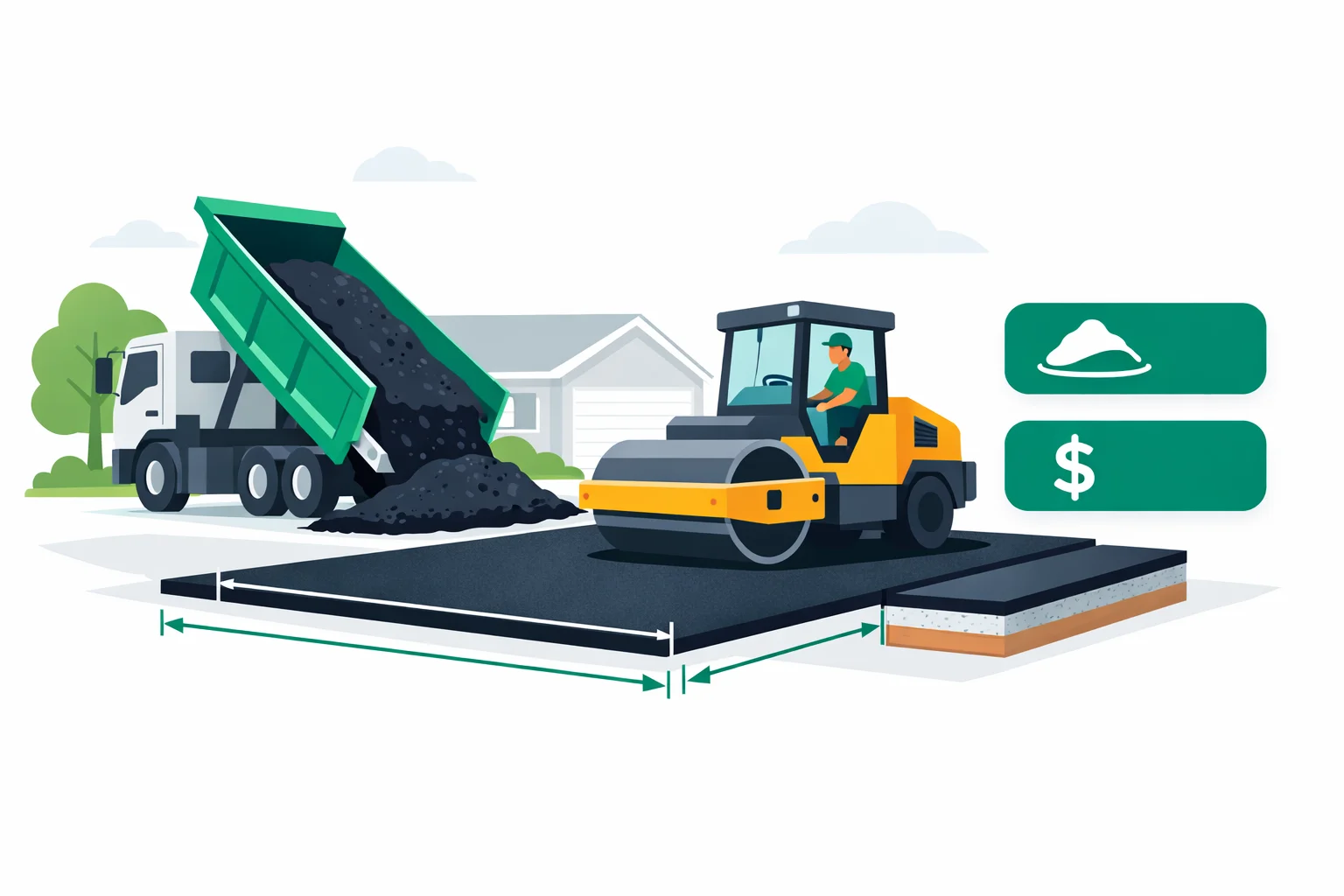
What Is an Asphalt Calculator?
An asphalt calculator converts your project's length, width, and thickness into the total tons of hot mix asphalt (HMA) you need to order. It factors in the density of compacted asphalt — roughly 145 pounds per cubic foot — and adds a waste allowance so you don't come up short. Think of it as the same concept behind a concrete calculator, but calibrated for asphalt's unique weight and compaction behavior.
Unlike concrete, which is ordered by the cubic yard, asphalt is sold by the ton. That distinction trips up a lot of first-time buyers. A cubic yard of loose hot mix weighs roughly 1.5 tons, but once the roller compacts it, the same material occupies less space and the weight-per-volume climbs. The calculator handles this conversion automatically.
The Asphalt Tonnage Formula
Here's the math behind every asphalt estimate:
Volume (cu ft)= Length (ft) × Width (ft) × Thickness (ft)
Weight (lbs)= Volume (cu ft) × 145 (lbs/cu ft, compacted HMA density)
Tons= Weight (lbs) ÷ 2,000
That 145 lbs/cu ft figure is the industry-standard compacted density for hot mix asphalt. Some specialty mixes (stone matrix asphalt, porous pavement) run a bit higher or lower, but 145 covers the vast majority of residential and commercial jobs. Always confirm the exact density with your asphalt plant if you're working with an unusual mix design.
Worked Example: 20×40 Driveway
A homeowner needs to pave a 20-foot-wide by 40-foot-long driveway at 2.5 inches of compacted asphalt. Let's run the numbers:
- Area:20 ft × 40 ft = 800 sq ft
- Thickness in feet:2.5 in ÷ 12 = 0.2083 ft
- Volume:800 × 0.2083 = 166.7 cu ft
- Weight:166.7 × 145 = 24,167 lbs
- Tons: 24,167 ÷ 2,000 = 12.08 tons
- With 10% waste: 12.08 × 1.10 = 13.3 tons
At $100 per ton for material, that's $1,330 in asphalt alone. The fully installed cost (material + base + labor) typically runs 2.0–2.5× the material cost, so budget $2,700–$3,300 for this driveway. Compare that to a concrete driveway of the same size, which would cost $4,800–$7,200 — one reason asphalt remains the most popular residential paving choice in cold-climate states.
Asphalt Thickness Guide by Project Type
Thickness is the single biggest variable in your asphalt budget. Going from 2 inches to 3 inches adds 50% more material and cost. Here's what the National Asphalt Pavement Association recommends for different applications:
| Project Type | Compacted Thickness | Gravel Base | Tons per 100 sq ft |
|---|---|---|---|
| Walkway / path | 1.5–2" | 4–6" | 1.1–1.4 |
| Residential driveway | 2–3" | 6–8" | 1.4–2.2 |
| Parking lot | 3–4" | 8–12" | 2.2–2.9 |
| Municipal road | 4–6" | 10–15" | 2.9–4.4 |
| Highway | 6–8"+ | 12–18" | 4.4–5.8+ |
Asphalt Cost Breakdown: Material vs. Installed
Material is only about 45% of your total paving bill. Here's where the money goes on a typical residential driveway job:
- Hot mix asphalt:$80–$120 per ton (45% of total). Prices spike in summer when every paving crew in town is competing for plant time.
- Labor:$1.50–$3.00 per sq ft (35% of total). Paving crews run fast — a 2-car driveway takes half a day — but equipment and crew size drive the cost.
- Base preparation:$1.00–$2.00 per sq ft (15% of total). This includes excavation, grading, compaction, and the aggregate base layer. Skipping proper base work is the fastest way to waste your asphalt investment.
- Overhead & profit:5–10% markup covers mobilization, insurance, and the contractor's margin.
Nationally, the average installed cost lands around $4.50 per square foot for a standard 2.5-inch residential driveway. That same project in concrete runs $6–$9 per square foot, which is why asphalt captures about 85% of the paving market in northern states where freeze-thaw cycles favor a flexible pavement.
Hot Mix vs. Cold Mix: Which Do You Need?
Hot mix asphalt is produced at 300–350°F and must be placed while hot — typically within 30–45 minutes of leaving the plant. It's the only option for driveways, parking lots, and any surface that needs to last more than a season. The heat activates the asphalt binder, and roller compaction fuses the aggregate into a dense, water-resistant mat.
Cold mix is a bagged product sold at hardware stores for $10–$15 per 50-pound bag. It's designed for temporary pothole patches and shouldn't be used for anything larger than a few square feet. Cold mix never fully cures the way hot mix does — it stays slightly flexible, which is handy for a quick pothole fill but terrible for a driveway surface. If a contractor suggests cold mix for a full paving job, find a different contractor.
Common Asphalt Paving Mistakes
Most asphalt failures trace back to one of these four mistakes:
- Skipping the gravel base.Asphalt laid directly on clay or topsoil fails within 2–3 years. The base layer provides drainage and load distribution. Budget $1–$2 per square foot for proper base work, or plan on repaving the whole thing in a few years.
- Paving in cold weather.Hot mix cools fast. Below 50°F ambient temperature, the asphalt cools before the roller can properly compact it, leaving air voids that let water in. Most plants shut down for the season once temperatures drop consistently below 40°F.
- Ordering too thin.A homeowner asks for 1.5 inches to save money on a 2-car driveway. Saving is about $600 in material — but that thinner surface cracks under SUV and truck weight within 3–5 years. The $600 “savings” turns into a $4,000+ repave.
- Ignoring drainage.Water is asphalt's worst enemy. The surface should slope at least 1–2% away from structures. Standing water seeps through tiny cracks, freezes, expands, and breaks the pavement apart from below.
Why Base Preparation Makes or Breaks Your Pavement
Your asphalt is only as strong as what's underneath it. A proper base consists of three layers:
- Subgrade: The native soil, compacted to 95% density. Clay-heavy soil should be removed and replaced with granular fill.
- Aggregate base:6–12 inches of crushed stone (typically ¾" minus), compacted in 4-inch lifts. This distributes weight and provides drainage.
- Tack coat: A thin layer of liquid asphalt sprayed on the base just before paving. It bonds the hot mix to the stone base and prevents delamination.
Contractors who rush base prep are cutting corners that cost you thousands down the road. Ask to inspect the base compaction before paving starts. If you can push a screwdriver into the compacted gravel by hand, it isn't compacted enough. For larger projects, use our construction calculator to estimate the aggregate base materials alongside your asphalt order.
Asphalt Maintenance Tips That Add Years
A well-maintained asphalt surface lasts 15–20 years. Skip maintenance and you're looking at 7–10 years — half the lifespan for the same upfront cost. Here's the maintenance schedule that contractors actually follow on their own properties:
- Year 1:Do nothing. Fresh asphalt needs 6–12 months to fully cure. Don't sealcoat a new driveway.
- Year 2–3:Apply the first sealcoat. Coal-tar or asphalt-based sealer costs $0.15–$0.25 per sq ft DIY, or $0.30–$0.50 per sq ft professionally. This blocks UV and water penetration.
- Every 2–3 years:Reapply sealcoat. Fill any cracks wider than ¼" with rubberized crack filler ($5–$8 per tube) before sealing.
- As needed: Patch potholes immediately. A $20 bag of cold patch fixes a small pothole today; ignoring it turns into a $500 base repair next year.
The Federal Highway Administration estimates that every $1 spent on preventive pavement maintenance saves $6–$10 in future repair costs. That math holds just as well for a residential driveway as it does for a highway.
When to Use This Calculator
- Before requesting contractor quotes— knowing your tonnage means you can spot-check whether a bid's material line item makes sense. If your calculator says 13 tons and the quote says 20, ask why.
- Comparing asphalt vs. concrete— run this calculator alongside the concrete calculator to compare material costs for the same project footprint.
- Planning a parking lot expansion— enter the new section's dimensions to get a quick tonnage and budget estimate before the project gets scoped.
- Estimating overlay costs— resurfacing an existing driveway typically uses 1.5–2 inches of new asphalt over milled or cleaned existing pavement.